Prepare from the whole pack
Upload board papers and supporting documents. BoardCue identifies key themes, risks, assurance gaps, strategic questions and relevant history before the meeting.
Explore feature →BoardCue connects board papers, previous meetings, risks, actions, decisions and live discussion so board members can prepare faster, challenge with evidence and retain what matters after the meeting. It is built for governance, not generic transcription.
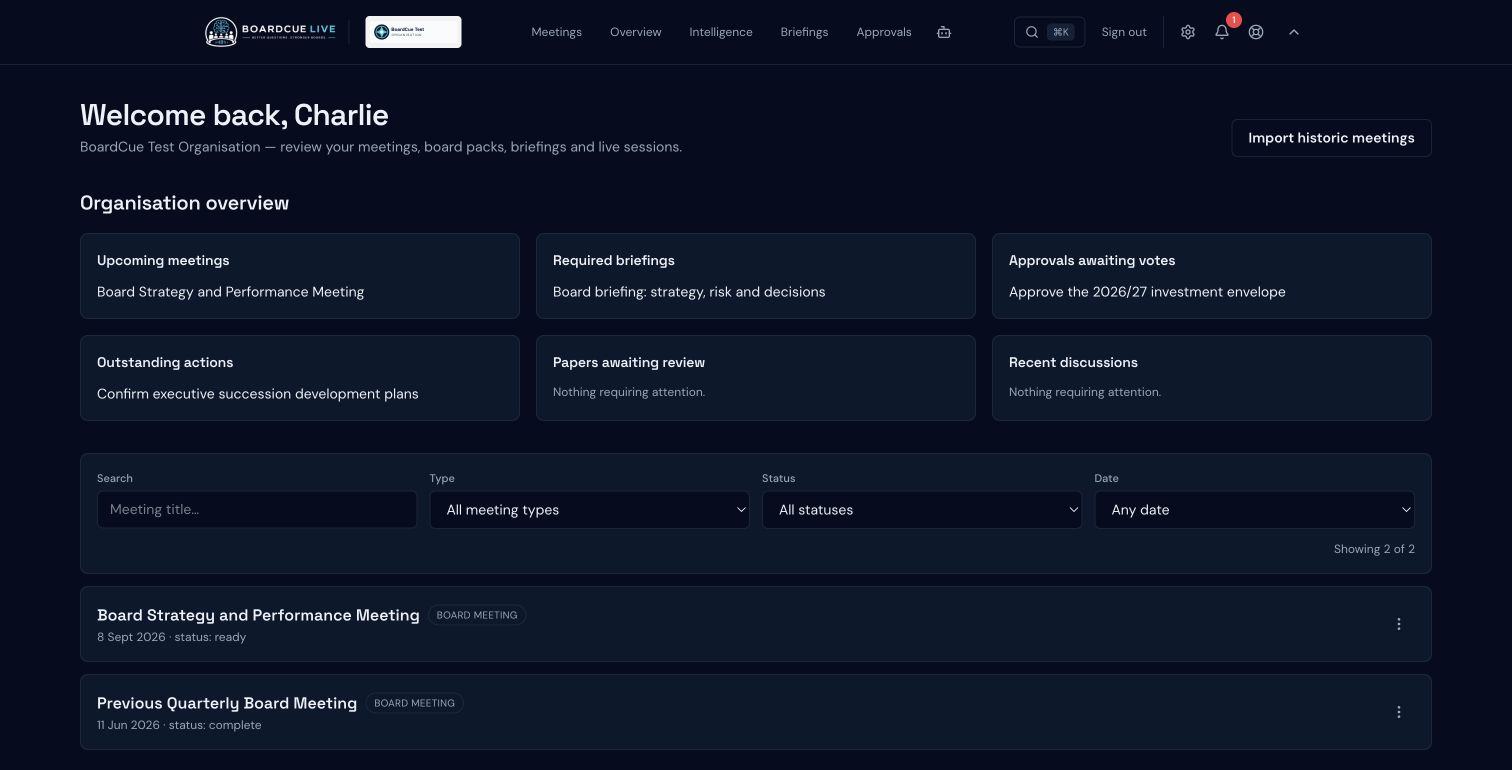
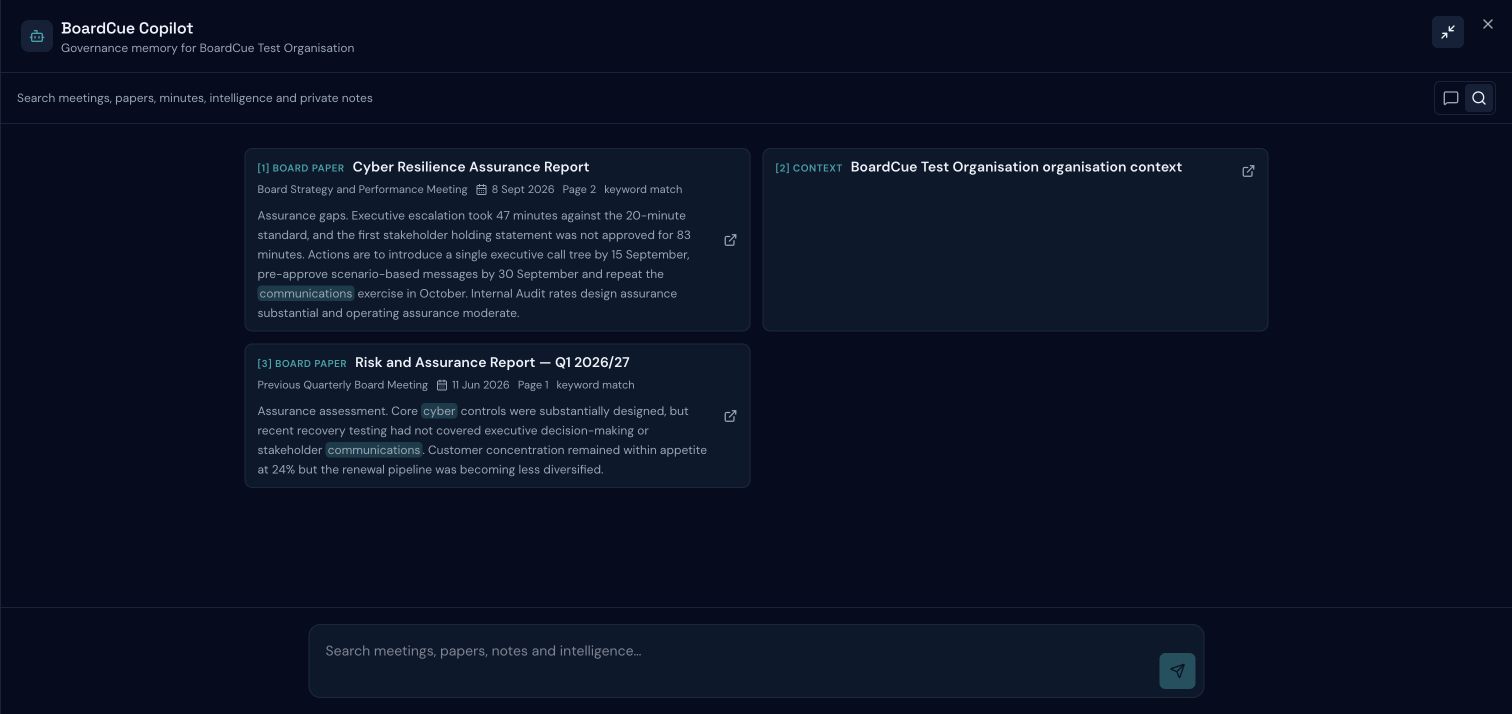
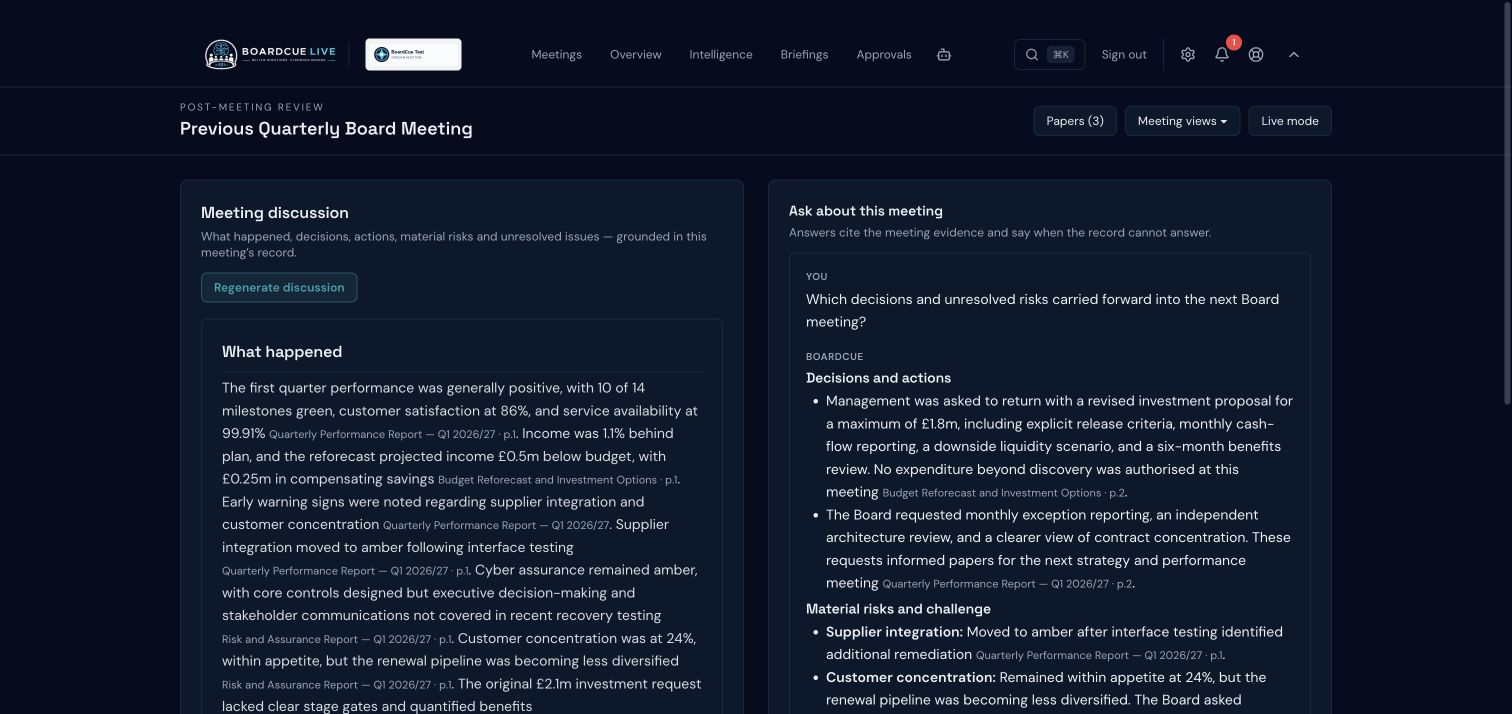
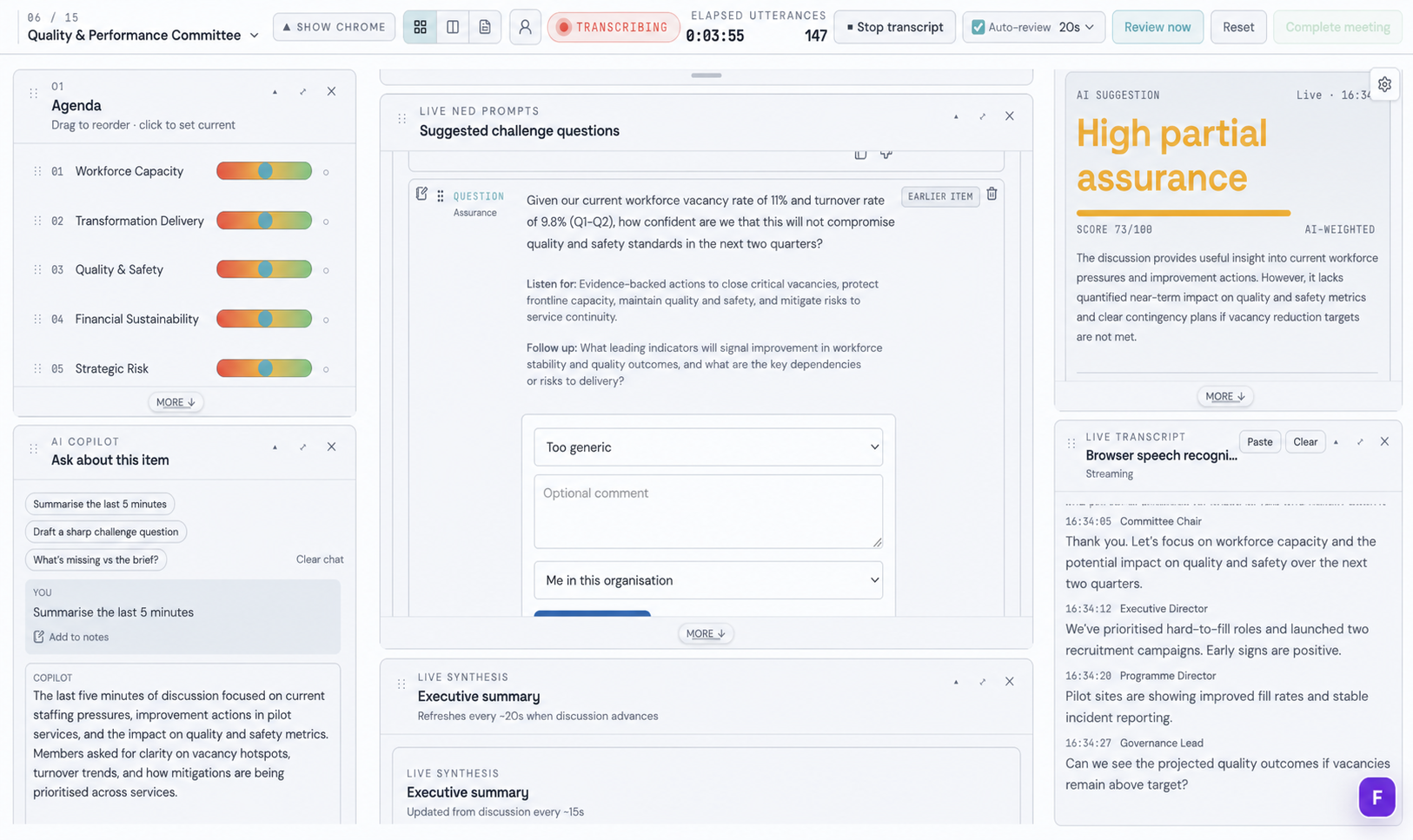
Current BoardCue Live interface · anonymised demonstration data
BoardCue works across the whole governance cycle rather than treating each meeting as an isolated event.
Upload board papers and supporting documents. BoardCue identifies key themes, risks, assurance gaps, strategic questions and relevant history before the meeting.
Explore feature →BoardCue follows the active agenda item and uses the live discussion alongside available evidence to surface timely governance prompts.
Explore feature →Compare what is being reported now with earlier papers, risks, actions, decisions, commitments and previous meetings.
Explore feature →Recover what the board was previously told, what it asked for, what changed and what remains unresolved.
Explore feature →Keep track of what you are not yet assured about, define the evidence you need and let BoardCue connect the challenge with what happens next.
Explore feature →Inspect the evidence behind significant insights rather than relying on an unexplained AI conclusion.
OrganisationExplore feature →For organisation deployments, keep papers, actions, decisions, approvals, briefings and workflows in one governed environment.
Explore feature →Run a short anonymous effectiveness pulse after meetings and track collective board and meeting effectiveness over time.
Explore feature →BoardCue Live workspace
Prepare
4 previous commitments and 3 material risks connected to the agenda.
Meet
Discussion, evidence and potential board-level questions stay in one line of sight.
Follow through
Owners, dates and unresolved assurance questions remain visible after the meeting.
Prepare with more than the current pack. A board paper rarely tells the whole story.
Bring meeting documents into a structured workspace linked to each agenda item.
Find where an issue has appeared before and what the board was previously told.
Surface questions, actions and assurances that should be followed through.
Generate focused areas for challenge without turning the board into operational management.
Turn board history into usable intelligence while the discussion is still happening.
Follow the discussion as it happens when recording and transcription are enabled—not merely as a transcript to read afterwards.
Keep the transcript and insights connected to the active paper or agenda item.
Surface concise strategic, risk and assurance questions early enough to use in the room.
Highlight where the live narrative differs from earlier evidence or commitments before the agenda moves on.
Open the source behind an insight without leaving the meeting workspace.
Retain more than a transcript. Turn each meeting into structured institutional memory.
Review decisions, owners, dates and follow-up requirements.
Record what assurance was taken and where uncertainty remains.
Keep unresolved concerns visible between meetings.
Make each meeting part of a longer governance record.
Maintain a private library of meetings and documents across your own board roles.
Connect multiple committees, shared document libraries and governance history with appropriate permissions.
BoardCue Live helps people find context, test assertions and identify potential questions. It does not decide what assurance a board should take or replace the responsibilities of directors, trustees and governors.